Skip to content

A grinding noise from a washing machine, especially during the spin cycle, is one of the more concerning sounds a Plainfield homeowner can hear from a laundry appliance. Unlike a simple rattle or hum, grinding usually points to a mechanical component that’s wearing down and will likely need attention soon.
This article covers the most common causes of grinding noises in washing machines, what to check safely, and when it’s time to call for professional repair.
Quick Answer
A grinding noise from a washing machine is most often caused by a worn tub bearing, debris trapped between the tub and drum, or a failing drive pulley or motor coupling. Grinding during the spin cycle specifically often points to bearing wear, which tends to worsen over time and typically requires professional repair.
What Causes a Worn Tub Bearing to Grind?
A worn tub bearing is one of the most common causes of grinding noises, especially in front-load washers, since this bearing supports the drum as it spins at high speed during the spin cycle.
Over years of use, water exposure and general wear can cause the bearing to break down, resulting in a grinding or growling sound that typically gets louder as the spin cycle speeds up. This type of wear tends to worsen progressively rather than resolve on its own.
Can Debris Trapped in the Washer Cause Grinding?
Yes. Small items like coins, buttons, or underwire from bras can sometimes work their way between the outer tub and the inner drum, creating a grinding or scraping sound as the drum rotates.
This is one of the more fixable causes of grinding noise, since removing the trapped object often resolves the issue immediately, though reaching the space between the tub and drum sometimes requires professional disassembly.
What Role Does the Drive Pulley or Motor Coupling Play?
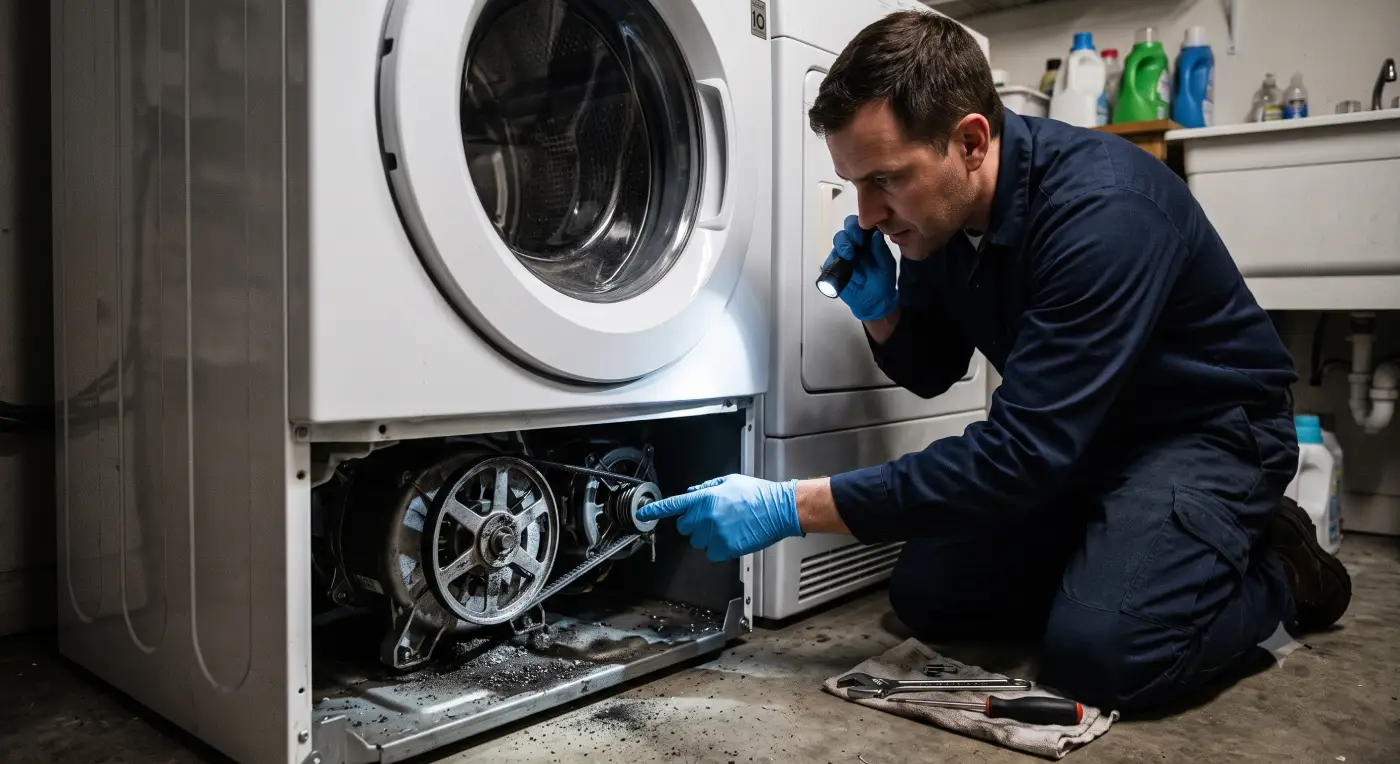
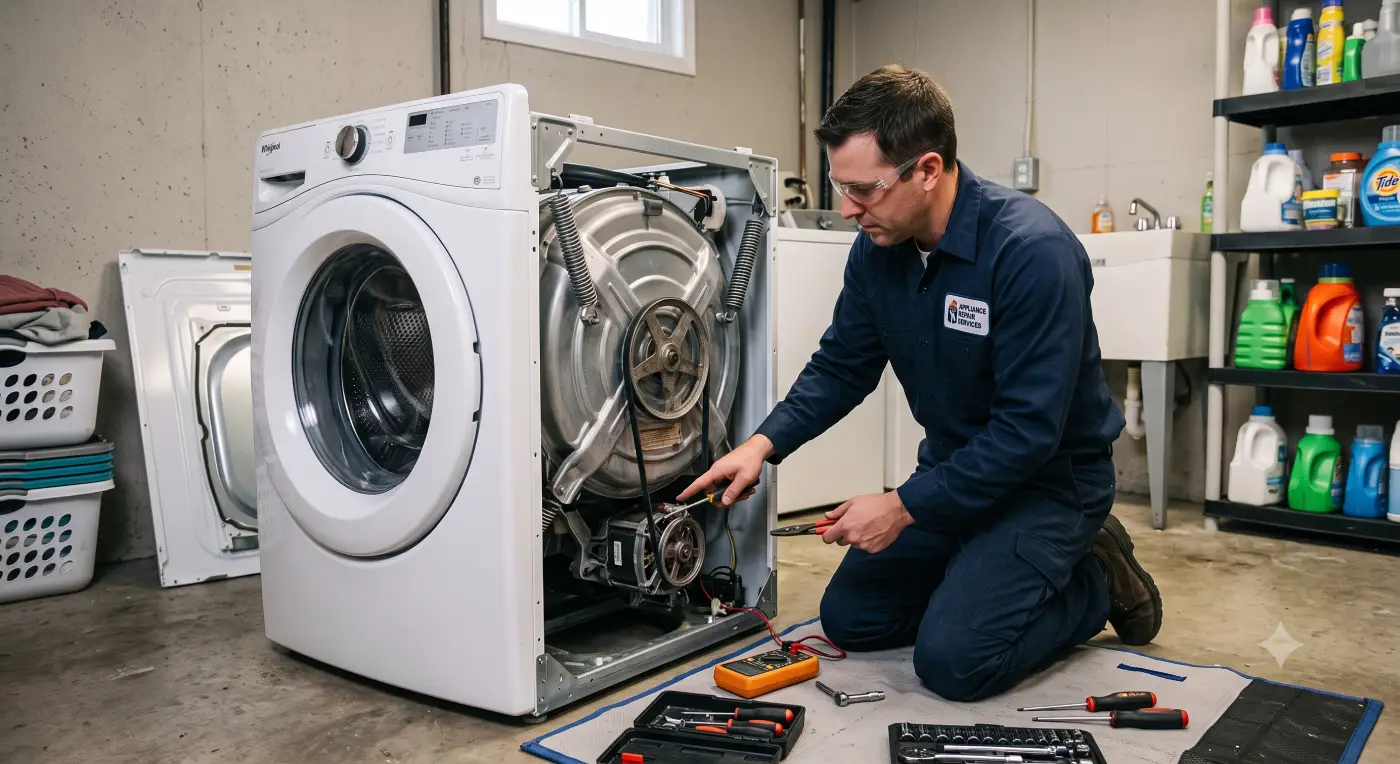
A worn drive pulley or motor coupling can also produce a grinding sound, particularly as these components begin to fail and no longer transfer power to the drum as smoothly as they should.
These parts are generally less expensive to replace than a tub bearing, but diagnosing which specific component is causing the noise usually requires a technician’s inspection, since the symptoms can sound similar from the outside.
Does the Timing of the Noise Help Identify the Cause?
Yes. Grinding that happens specifically during the spin cycle, especially as speed increases, often points to a bearing or pulley issue, while grinding throughout the entire cycle, including during fill and wash, may point to a different mechanical source like the motor itself.
Paying attention to exactly when the noise occurs can help a technician diagnose the issue more quickly during a service visit.
What Can You Safely Check at Home?
These checks are safe for most Plainfield homeowners to try:
- Empty pockets and check for small items like coins or wire fragments before washing
- Confirm the washer is sitting level on the floor
- Note whether the grinding happens during fill, wash, or specifically during spin
- Avoid overloading the washer, which can put extra strain on bearings and pulleys
- Check for visible objects lodged around the door boot or drum opening, if accessible
Safety warning: Do not attempt to disassemble the drum, replace a tub bearing, or access internal drive components. These repairs require specialized tools and significant disassembly and should be handled by a licensed technician.
When Should You Call a Professional Appliance Repair Technician?
Call a professional for washing machine repair in Plainfield if:
- Grinding noise occurs consistently during the spin cycle
- The noise has gotten louder or more frequent over time
- You suspect an object is trapped but can’t safely remove it yourself
- The washer also shows signs of leaking or reduced spin performance
- The grinding is accompanied by a burning smell
Is It Worth Repairing a Washer With a Bad Tub Bearing?
This depends on the age of the washer and the cost of the repair compared to replacement. Tub bearing repairs can be more involved than other washer repairs, so a technician can help you weigh the cost against the washer’s remaining expected lifespan.
Frequently Asked Questions
This pattern often points to a tub bearing or drive pulley issue, since these components experience the most stress at higher spin speeds compared to the slower agitation or fill phases.
It’s unlikely. Mechanical wear that causes grinding noises, such as a failing bearing, typically continues to worsen over time rather than improving without repair.
You can generally continue using it in the short term, but continuing to run cycles with a worn bearing or trapped debris can potentially cause additional damage to the drum or tub over time.
Costs vary based on the washer model and the extent of disassembly required, since bearing repairs are often more labor-intensive than other washer repairs. A technician can provide an accurate estimate after inspection.
If the object is visible and easily accessible, such as near the door boot, removing it may be reasonable. Objects trapped between the tub and drum typically require professional disassembly to access safely.
Front-load washers rely more heavily on the tub bearing to support the drum during high-speed spinning, which is why bearing-related grinding noises are somewhat more commonly reported on front-load models.
Conclusion
A grinding noise from a washing machine is usually tied to a worn tub bearing, trapped debris, or a failing drive component, and the noise’s timing during the cycle can help narrow down the cause. Since grinding related to mechanical wear tends to worsen over time, it’s a good idea to have it inspected before the issue progresses.
If your washing machine is making a grinding noise, AP1 Appliance Repair provides washer repair throughout Plainfield and the surrounding area. Contact us to schedule a diagnostic visit.