Skip to content


A dishwasher that leaves gritty plates, cloudy glasses or baked-on food is usually telling you one of four things: the load is blocking the spray, the filter is clogged, the water isn’t hot enough, or a part has failed. The first three are free to fix. Heavy use during the holidays, with its casseroles, starchy sides and greasy roasting pans, tends to expose all of them at once.
Quick Answer
A dishwasher stops cleaning well when spray arms are blocked, the filter is clogged, the water is too cool, too much or too little detergent is used, or dishes are loaded in a way that blocks the spray. Check the load, clean the filter and spray arm holes, and run hot water at the sink before starting. If dishes stay dirty, a pump or valve may be failing.
Look at the Load First
It sounds basic, but loading is behind a surprising number of “dirty dish” complaints.
- A tall pan or cutting board can block a spray arm from turning. Open the door mid-cycle (when it’s safe to do so) or spin the arms by hand before you start.
- Bowls facing up fill with water and don’t get cleaned. Angle them down.
- Nested plates and overlapping utensils shield each other from the spray.
- A packed lower rack leaves nothing for the water to reach.
If the arms don’t spin freely, that’s the first fix.
Clean the Filter
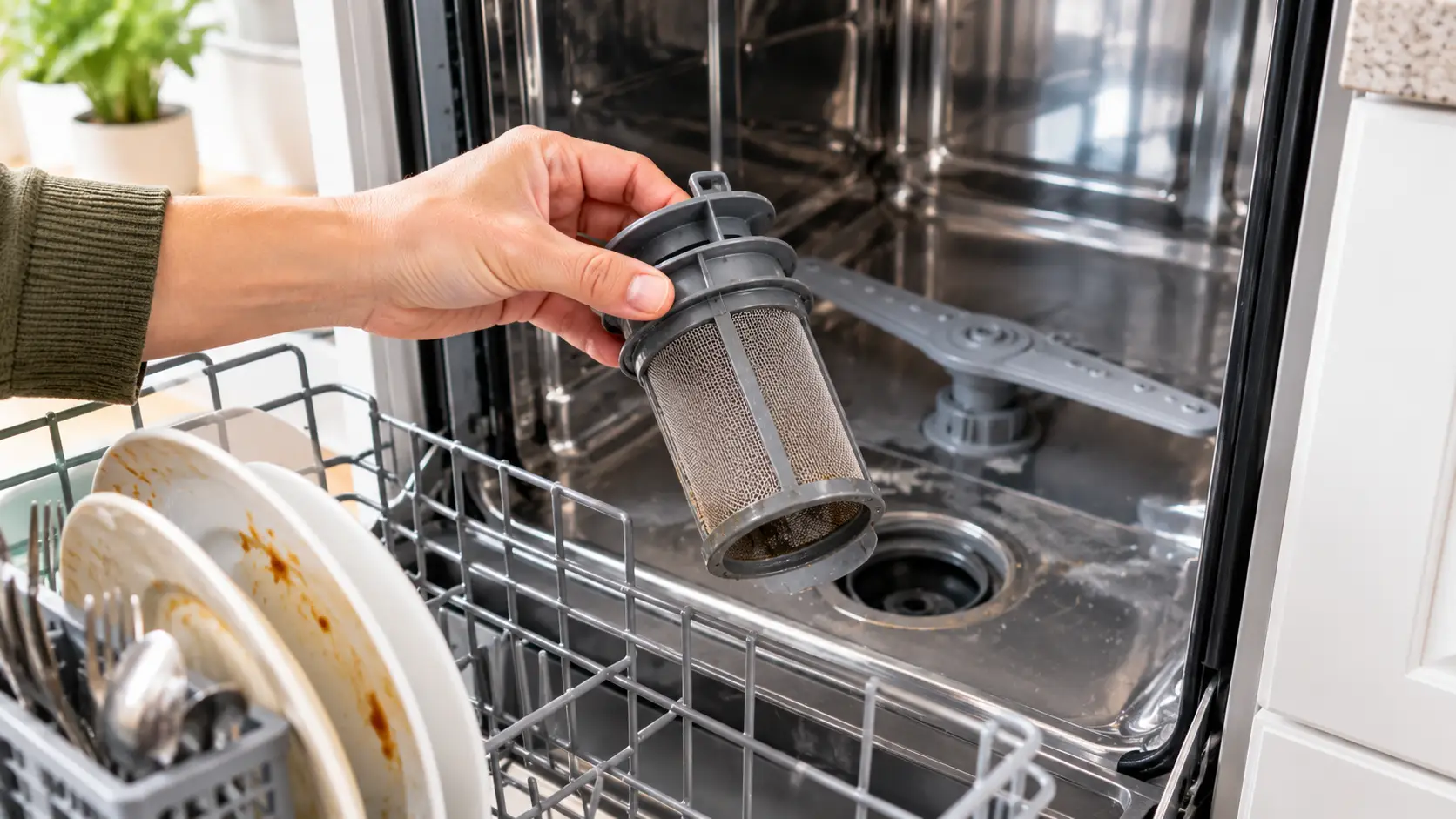
Most dishwashers have a filter in the bottom of the tub, below the lower spray arm. It catches food particles so the pump doesn’t. After a heavy holiday meal, it can clog quickly, and water then moves poorly through the system.
Your manual shows how to remove it. Twist or lift it out, rinse it under running water, and brush off residue with a soft brush. Don’t scrub with anything abrasive. Check the area underneath for a piece of glass, a bone or a label that has slipped past.
Check the Spray Arms
The small holes in each spray arm can clog with food bits and mineral scale. Hold the arm up to the light. If the holes look blocked, clear them with a toothpick, not a sharp metal pin that can widen the opening. Make sure the arm snaps back on firmly and spins without wobble.
Water Temperature and Detergent
Dishwashers rely on hot water to dissolve detergent and cut grease. Many manufacturers suggest running the kitchen tap until the water turns hot before you start the cycle. If your water heater is set low or the dishwasher sits far from it, that may help.
Detergent matters too:
- Use fresh detergent. Old tablets and powder clump and lose strength.
- Don’t use more than the manual calls for. Excess soap leaves a film.
- Make sure the detergent door opens. Items tucked against it can keep it closed.
Gritty, Cloudy or Filmy: Which Is It?
The look of the problem points to a cause.
- Gritty residue is often food particles, which suggests a clogged filter or weak circulation.
- A white or cloudy film on glass usually comes from hard water minerals. Rinse aid can help, and so can a periodic cleaning cycle.
- A greasy or soapy film can mean too much detergent, or not enough hot water to wash it away.
Scrape, Don’t Pre-Rinse Everything
Pre-rinsing every plate is a habit that many manuals discourage. Modern detergents work better with some food soil to act on. Scrape off the heavy stuff, like bones, big food chunks and mashed potatoes, and let the dishwasher do the rest.
Standing Water at the Bottom
A pool of water left in the tub after the cycle points to a drain problem. A clogged filter, a kinked drain hose, or a blocked drain on the sink side (where the dishwasher hose connects) are all possible. If the sink has a garbage disposal, the knockout plug on a new disposal can also block the dishwasher drain. Clean the filter first, then check that the drain hose isn’t pinched behind the machine.
When It Points to a Failed Part
If you’ve fixed the loading, the filter, the arms and the water temperature, and the dishes are still dirty, a part may be failing:
- A weak circulation pump that doesn’t build enough pressure
- A water inlet valve that lets in too little water
- A heating element that isn’t warming the water
- A faulty door latch that stops the cycle early
These need testing. A technician can check each one rather than replacing them by trial and error.
What to Leave to a Technician
Anything involving the pump, the valve, the heating element, or electrical connections. Water and electricity share the space under a dishwasher, and it isn’t a good place for guesswork.
Getting a Diagnosis
For homes in Indianapolis, AP1 Appliance Repair provides dishwasher repair for residential machines. If you’d like to see whether your community is covered, check the service areas page.
Scraping off large food is enough for most modern machines. Check your manual, since some manufacturers say heavy pre-rinsing can make detergent less effective.
Usually hard water minerals. Rinse aid and a periodic dishwasher cleaning cycle can help. If the film wipes off with vinegar, it’s likely mineral scale, not soap.
Many manufacturers suggest every month or two, and sooner after heavy use. Your manual has the schedule for your model.
Gritty residue usually means food particles are recirculating, which points to a clogged filter or blocked spray arm holes.
Trapped food in the filter or the bottom of the tub is the usual cause. Clean the filter and run an empty cycle with a dishwasher cleaner.
It struggles. Detergent works best in hot water, and grease won’t dissolve as well in cold. Run the tap hot before you start the cycle.