Skip to content

A refrigerator that isn’t keeping food cold is one of the more urgent household appliance problems, since it directly affects food safety. Fortunately, cooling loss tends to follow a fairly predictable set of causes across most refrigerator brands, which makes it possible to narrow down the likely issue with a few basic checks.
This article walks through why refrigerators stop cooling properly, what Carmel homeowners can safely check themselves, and when it’s time to call for professional repair.
Quick Answer
A refrigerator not cooling is most often caused by dirty condenser coils, a blocked internal air vent, a failing evaporator fan, or a worn door gasket letting warm air in. If the freezer stays cold but the refrigerator section warms up, the issue is usually related to airflow between compartments rather than the compressor itself.
Why Do Dirty Condenser Coils Cause Cooling Loss?
Condenser coils play a central role in a refrigerator’s ability to release heat, and when they become coated in dust, pet hair, or debris, the compressor has to work harder and run longer to maintain the target temperature.
Condenser coils are typically located behind or underneath the refrigerator. Over time, a lack of cleaning can gradually reduce cooling efficiency and, in some cases, contribute to premature compressor wear from the added strain.
Why Is My Freezer Cold But the Refrigerator Section Isn’t?
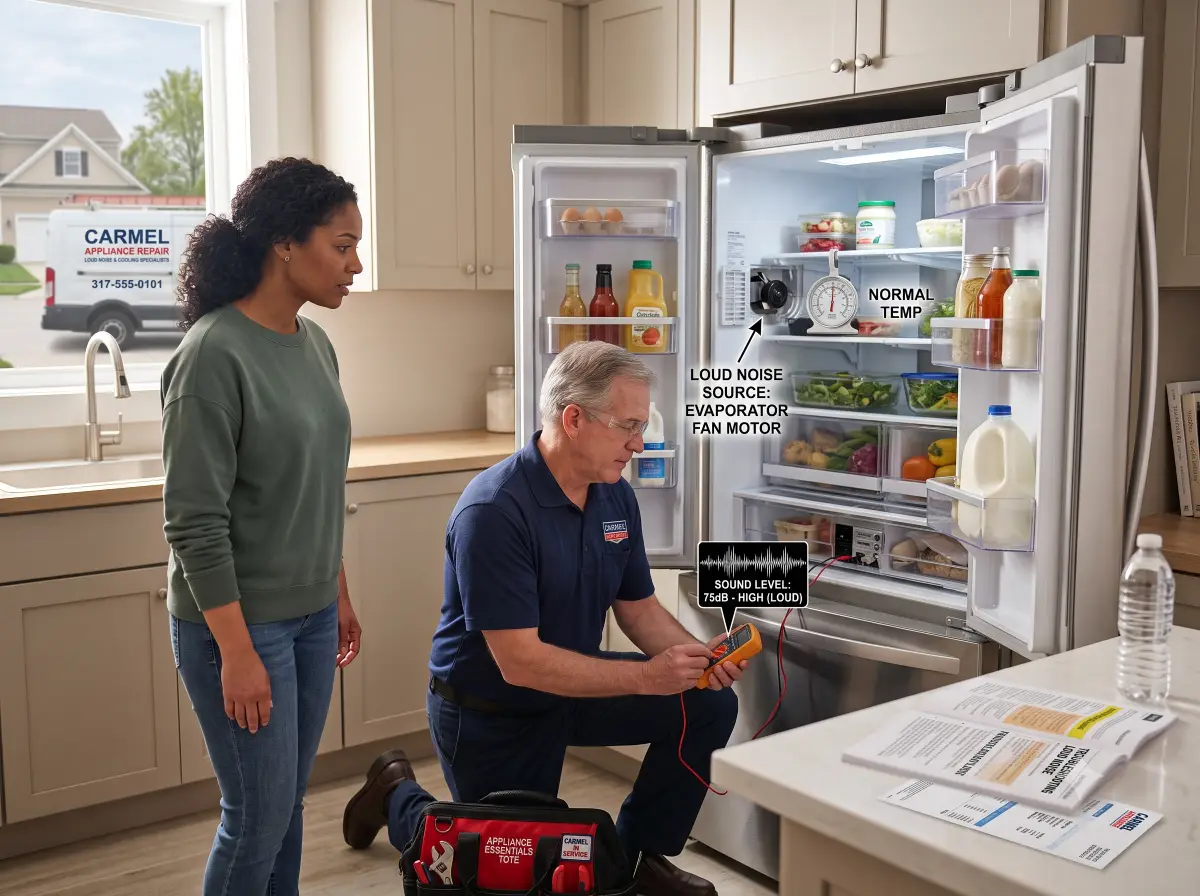
When the freezer stays cold but the refrigerator section warms up, the most likely explanation is a blocked air vent or a failing evaporator fan that isn’t circulating cold air from the freezer into the fresh food compartment.
- Overcrowded shelves or food packages placed too close to the internal vent can physically restrict airflow
- A frozen evaporator coil, often tied to a defrost system malfunction, limits the cold air available to circulate
- A weak or failed evaporator fan motor won’t move air through the vent system even if the coil itself is functioning normally
How Does a Worn Door Gasket Contribute to Cooling Problems?
A worn or damaged door gasket allows warm air to continuously enter the refrigerator, forcing the compressor to run more frequently and for longer periods to compensate, which can prevent the unit from ever reaching its set temperature.
Signs of a failing gasket include visible cracks or gaps, condensation forming around the door edges, or a door that doesn’t feel like it’s sealing tightly when closed.
Could the Location of the Refrigerator Be Contributing to the Problem?
Yes, in some cases. A refrigerator placed too close to a wall or without adequate clearance can struggle to release heat properly from the condenser coils, which can contribute to reduced cooling efficiency even when the appliance itself is otherwise in good condition.
Most manufacturers recommend a small amount of clearance around the back and sides of the refrigerator to allow for proper airflow and heat dissipation, something worth checking if a refrigerator has been recently moved or reinstalled.
What Can You Safely Check at Home?
These checks are safe for most Carmel homeowners to try before calling for repair:
- Vacuum dust and debris from the condenser coils, typically located behind or under the unit
- Check that food items aren’t blocking the internal vents between compartments
- Inspect the door gasket for gaps, tears, or debris preventing a full seal
- Confirm the refrigerator has adequate clearance around the back and sides
- Check that the temperature control settings haven’t been accidentally adjusted
Safety warning: Do not attempt to access sealed refrigerant lines, replace a compressor, or work on internal electrical components. These repairs require refrigerant handling certification and specialized tools.
When Should You Call a Professional Appliance Repair Technician?
Call a professional for refrigerator repair in Carmel if:
- The refrigerator stays warm even after cleaning coils and checking the door seal
- The freezer is cold but the refrigerator section isn’t, and clearing vents doesn’t help
- You hear the compressor clicking repeatedly without actually starting
- Food has already begun to spoil due to inconsistent cooling
- The refrigerator runs constantly without ever reaching the set temperature
How Quickly Should Cooling Issues Be Addressed?
Refrigerator cooling problems are worth addressing promptly, since perishable food generally shouldn’t be left above 40°F for more than about two hours. If your refrigerator isn’t cooling properly, it’s reasonable to check basic causes right away and consider temporary cooler storage for perishables while arranging repair.
Frequently Asked Questions
Cleaning the coils roughly every six months is a reasonable guideline for most households, though homes with pets or higher dust levels may benefit from more frequent cleaning.
This often points to a partial airflow restriction or moderately dirty condenser coils rather than a complete component failure, though it’s still worth checking since the issue can gradually worsen.
Yes, overloaded shelves can block internal vents and disrupt normal air circulation, making it harder for cold air to reach all areas of the refrigerator evenly.
Some extended run time is normal, particularly after the door has been open for a while or during hot weather. Running constantly without ever reaching the set temperature, however, suggests an underlying issue.
Generally no, since unplugging can interrupt the compressor’s restart cycle without resolving the underlying cause. It’s better to check basic causes first and contact a technician if the issue continues.
A lack of the usual faint fan noise from the freezer area, combined with warm air reaching the refrigerator section, can suggest a failed evaporator fan, which a technician can confirm directly.
A refrigerator that isn’t cooling is most often related to dirty coils, blocked airflow between compartments, or a worn door seal rather than a fully failed compressor. Checking these common causes first can sometimes resolve the issue, but ongoing cooling problems are worth addressing with professional repair promptly.
If your refrigerator isn’t keeping food cold, AP1 Appliance Repair provides refrigerator repair throughout Carmel and the surrounding area. Contact us to schedule a diagnostic visit.