Skip to content

Refrigerators aren’t silent appliances, but a noise that’s louder or noticeably different from what you’re used to hearing is worth paying attention to. Since refrigerators rely on a compressor and multiple fans to keep running, the type of noise you’re hearing can actually help point toward the likely cause.
This article breaks down the most common refrigerator noises Carmel homeowners report, what typically causes each one, and when it’s time to call for repair.
Quick Answer
A refrigerator making a loud noise is commonly experiencing clicking, buzzing, humming, or rattling. Clicking often points to a start relay or compressor attempting to cycle on. Buzzing or humming usually comes from the compressor or fans running under normal or strained conditions. Rattling is frequently caused by loose components or ice buildup interfering with a fan blade.
What Does Clicking From a Refrigerator Usually Mean?
Clicking noises are most often caused by the compressor’s start relay attempting to engage, which can indicate either a normal startup cycle or a failing relay if the clicking repeats without the compressor actually starting.
A single click followed by the compressor running normally is typically part of a standard startup sequence. Repeated clicking without the compressor ever starting, however, usually points to a failing start relay or capacitor that needs professional testing.
Why Is My Refrigerator Buzzing or Humming Loudly?
A buzzing or humming noise commonly comes from the compressor or condenser fan operating, and some level of this sound is considered normal for most refrigerators.
- A steady, low hum during normal operation is typically just the compressor or fans running as expected
- A louder or irregular buzz can indicate the compressor is straining, often due to dirty condenser coils restricting airflow
- A buzzing sound paired with poor cooling performance is more likely to indicate a genuine issue than normal background noise
What Causes Rattling in a Refrigerator?
Rattling noises are commonly caused by loose interior components, items inside the refrigerator vibrating against shelves or walls, or ice buildup interfering with a fan blade.
- Bottles, jars, or containers vibrating against each other or the refrigerator walls
- Loose panels or trim pieces that have shifted slightly over time
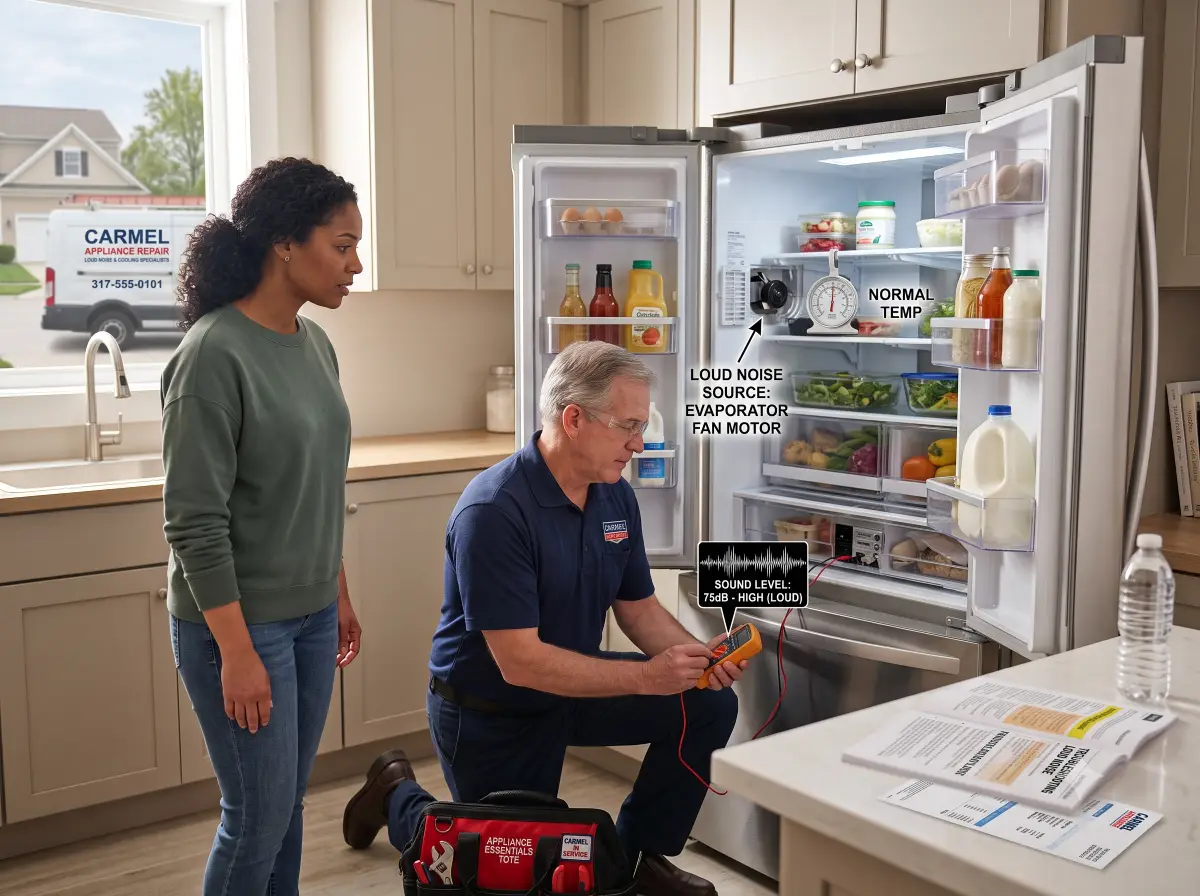
- Ice accumulation around the evaporator fan, which can cause the fan blade to strike ice as it spins
Why Does My Refrigerator Make a Popping or Cracking Sound?
Occasional popping or cracking sounds are often related to normal temperature changes causing plastic or metal components to expand and contract, though frequent or loud popping can sometimes indicate a component under stress.
This type of noise is generally less concerning than clicking or buzzing tied to cooling performance, but it’s still worth noting if it becomes more frequent or noticeably louder over time.
What Can You Safely Check at Home?
These checks are safe for most Carmel homeowners to try:
- Check that no items inside the refrigerator are touching the walls or vibrating against shelves
- Vacuum dust and debris from the condenser coils, typically located behind or underneath the unit
- Confirm the refrigerator is sitting level on the floor
- Listen for whether the noise happens during startup, throughout operation, or only occasionally
- Check for visible ice buildup around the freezer’s rear wall, where the evaporator fan is typically located
Safety warning: Do not attempt to access the sealed refrigerant system, replace the compressor, or disassemble the evaporator fan assembly. These repairs require refrigerant handling certification and specialized tools.
When Should You Call a Professional Appliance Repair Technician?
Call a professional for refrigerator repair in Carmel if:
- Clicking repeats without the compressor ever starting
- Buzzing or humming is paired with reduced cooling performance
- Rattling continues after confirming no items inside are causing the noise
- The noise is new, loud, or significantly different from what you’re used to hearing
- You notice any burning smell alongside the noise
Does a Loud Noise Always Mean Something Is Broken?
No. Refrigerators produce a range of normal operating sounds during compressor cycling, defrost cycles, and fan operation. The key is noticing changes from what’s typical for your specific unit, especially when paired with other symptoms like reduced cooling performance.
Frequently Asked Questions
Yes, a brief rushing or filling sound when the ice maker’s water valve opens is normal and shouldn’t be a cause for concern on its own.
Refrigerators aren’t actually louder at night, but quieter household background noise often makes normal operating sounds more noticeable during quiet hours.
Yes, a refrigerator that isn’t sitting level can vibrate against the floor or nearby cabinets, creating rattling or buzzing sounds that often improve once the unit is properly leveled.
Repeated clicking without the compressor starting, combined with a lack of cooling, is one of the stronger signs of a compressor-related issue and typically needs professional diagnostic testing to confirm.
Some soft crackling or dripping sounds during defrost cycles are normal, as accumulated frost melts and drains. Loud or unusual noises specifically during this cycle can sometimes point to a defrost heater or drain issue.
Generally no, unless the noise is paired with a burning smell or other safety concern. Otherwise, it’s usually fine to continue using the refrigerator while you check basic causes or schedule a service visit.
Conclusion
Noises from a refrigerator can range from completely normal operating sounds to early warning signs of a fan, compressor, or component issue. Paying attention to when a noise happens and whether it’s paired with reduced cooling can help you determine whether it’s worth a closer look.
If your refrigerator is making a noise that doesn’t seem normal, AP1 Appliance Repair provides refrigerator repair throughout Carmel and the surrounding area. Contact us to schedule a diagnostic visit.