Skip to content


An ice maker that quits is almost always short of one of three things: cold, water, or a free path for the ice to drop. The freezer has to hold 0°F, water has to reach the unit through an open valve and a filter that isn’t clogged, and nothing can be jamming the bin or the arm. Check those in order and you’ll usually find the cause, or at least know whether it’s a part that needs replacing.
Quick Answer
A refrigerator ice maker stops making ice because the freezer isn’t cold enough, the water supply is shut off or restricted, the water filter is clogged, the fill tube has frozen, or ice has jammed the bin or the shutoff arm. Check the freezer temperature and the water valve first. If those are fine, the water inlet valve or the ice maker module may have failed.
Check the Freezer Temperature
Ice makers need a freezer at 0°F to work normally. A thermometer in the freezer will tell you the truth faster than the dial. If it reads warmer than about 5°F, the ice maker may not run at all, and the freezer has its own problem to sort out first. The airflow guidance in our refrigerator prevention guide applies here: a packed freezer or blocked vent can raise the temperature.
Make Sure It’s Actually On
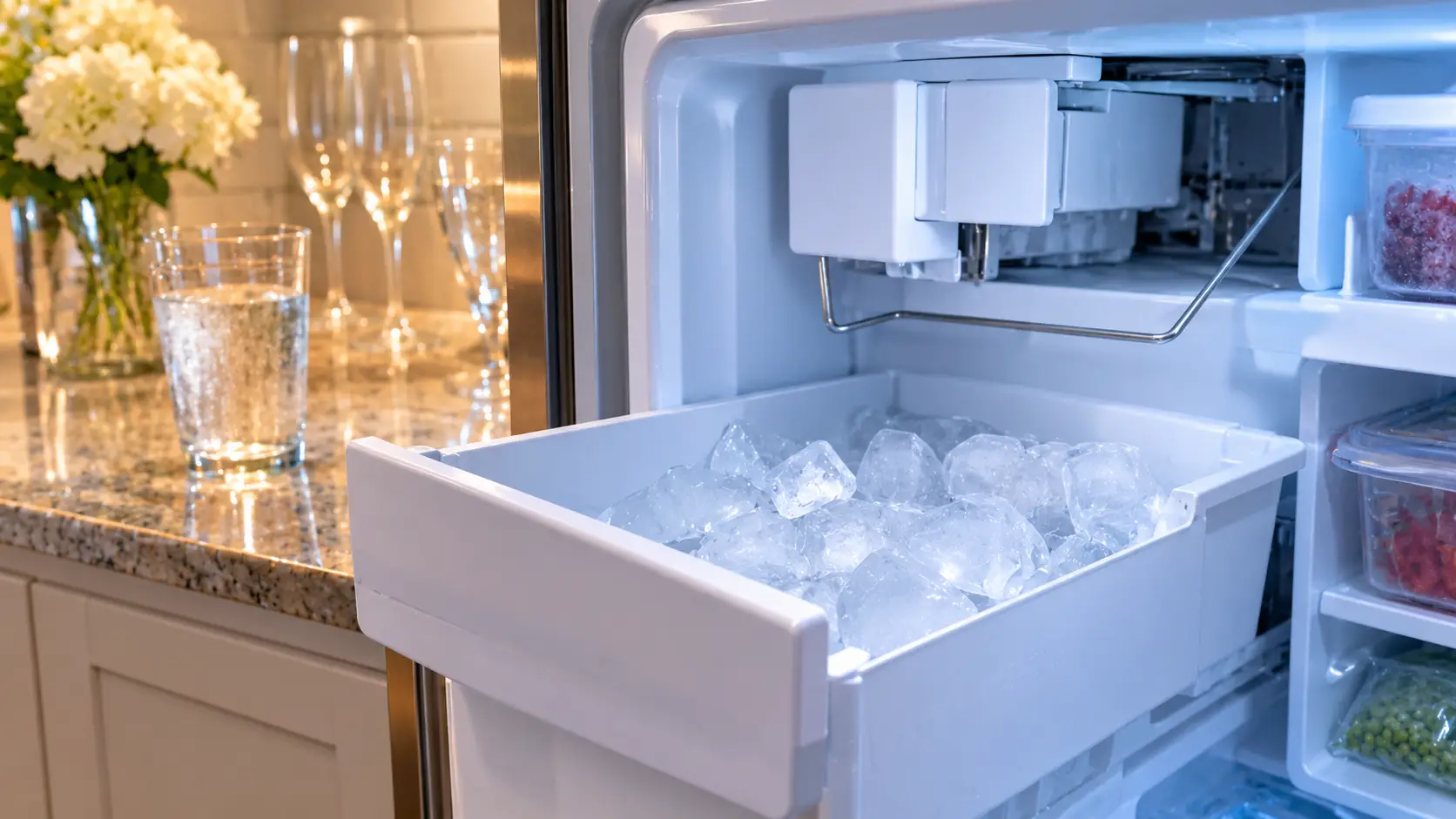
It’s an easy thing to miss. Many ice makers have a wire arm (the bail arm) that shuts production off when you lift it, or an on/off switch on the unit. A lifted arm, or one that was bumped during a freezer reorganization, stops ice production entirely. Lower it to the down position, or flip the switch on. Some models also need a few hours to restart.
Check the Water Supply
If the freezer is cold and the ice maker is on, the next question is water.
- Shutoff valve. The small valve behind or under the fridge that feeds the water line may have been closed or only partly open.
- A kinked line. If the fridge was pushed back against the wall, the supply line can pinch. Pull it forward gently and look.
- The water dispenser. If water comes out slowly or not at all, the problem is upstream of the ice maker.
When you move the refrigerator to check, take care not to scratch the floor or pull on the water line.
Replace the Water Filter if It’s Due
A clogged filter lowers water flow so much that the ice maker doesn’t get enough to fill the tray. This often shows up as small, hollow or misshapen cubes. Most manufacturers recommend changing the filter about every six months, but your manual has the interval and the correct filter for your model. Use the specified part, because a mismatched filter can leak.
A Frozen Fill Tube or an Ice Jam
If the ice maker made ice before and then stopped, look for ice where it shouldn’t be.
- A frozen fill tube. The tube that carries water into the ice maker can freeze solid if the freezer is too cold or the water flow is slow. A technician can clear it. Don’t use a hair dryer on high heat or any open flame.
- A jammed bin. Ice cubes that have fused into a lump can block the chute or hold the bail arm up. Remove the bin, empty it, and let any lump thaw. Don’t chip at ice with a knife or screwdriver, since you can puncture a line or damage plastic.
After a New Install or a Move
A newly installed refrigerator needs time before the ice maker produces anything. Manufacturers often say to wait 24 hours or more, and the first few batches of ice are often discarded. If the water line was just connected, flush it per the manual first.
Signs of a Failed Part
If the cold, the water and the arm are all fine and there’s still no ice, one of these is likely:
- The water inlet valve. It opens to let water into the ice maker. If it fails, no water arrives, even though the shutoff valve is open.
- The ice maker module or its heater. Many ice makers use a small heater to release cubes, and the module can burn out.
- A control or sensor fault.
These need testing with a meter and the right replacement part. This is where trial-and-error gets costly.
What You Can Safely Do
Checking the temperature, the arm, the shutoff valve and the filter are all fine. Moving the fridge slightly to look at the water line is fine, if you’re careful. Stop before opening panels or touching wiring, and unplug the refrigerator before any work near the back.
Why It Matters Before the Holidays
Parties mean a lot more ice. If the ice maker is already weak, don’t count on it for a full house. Buy bags of ice as a backup and have the ice maker looked at afterward.
When to Call a Technician
When the freezer is at 0°F, the water supply is good, and the filter is new, a failed valve or module is the most likely cause. For homes in Indianapolis, AP1 Appliance Repair provides refrigerator repair for residential units. You can also find other covered appliances on the services page.
FAQ
Often 24 hours or more, and the first batches are commonly thrown out. Follow your manual’s startup instructions for your model.
Low water flow is the usual reason, often from a clogged filter, a partly closed valve or a kinked line.
The tray may be frozen into a clump, the fill tube may have frozen, or the ice may not be releasing because the heater has failed.
Old ice absorbs freezer odors, and an old filter can affect taste. Replace the filter, empty and wash the bin, and keep strong-smelling food sealed.
Many models have a reset button or a procedure listed in the manual. Check yours instead of guessing, since the steps differ by brand.
Yes, for longer absences. Lift the arm or turn the switch off, and consider closing the water valve to reduce the chance of a leak.