Skip to content


When a dryer needs two cycles for one load of towels, the heat is usually fine and the air isn’t moving. A dryer works by pushing hot air through wet clothes and carrying the moisture out through the vent. Restrict that path anywhere along the way and drying times stretch. That’s more than a nuisance, because a restricted vent also traps heat and lint, and that’s a fire concern.
Quick Answer
A dryer takes too long to dry mainly because airflow is restricted: a clogged lint screen, a blocked or crushed vent hose, a stuck exterior vent flap, or an overloaded drum. Clean the screen, check the vent from behind the dryer to outside, and dry smaller loads. If clothes come out hot but damp even with clear airflow, a heating or sensor problem may be involved.
Start With the Lint Screen
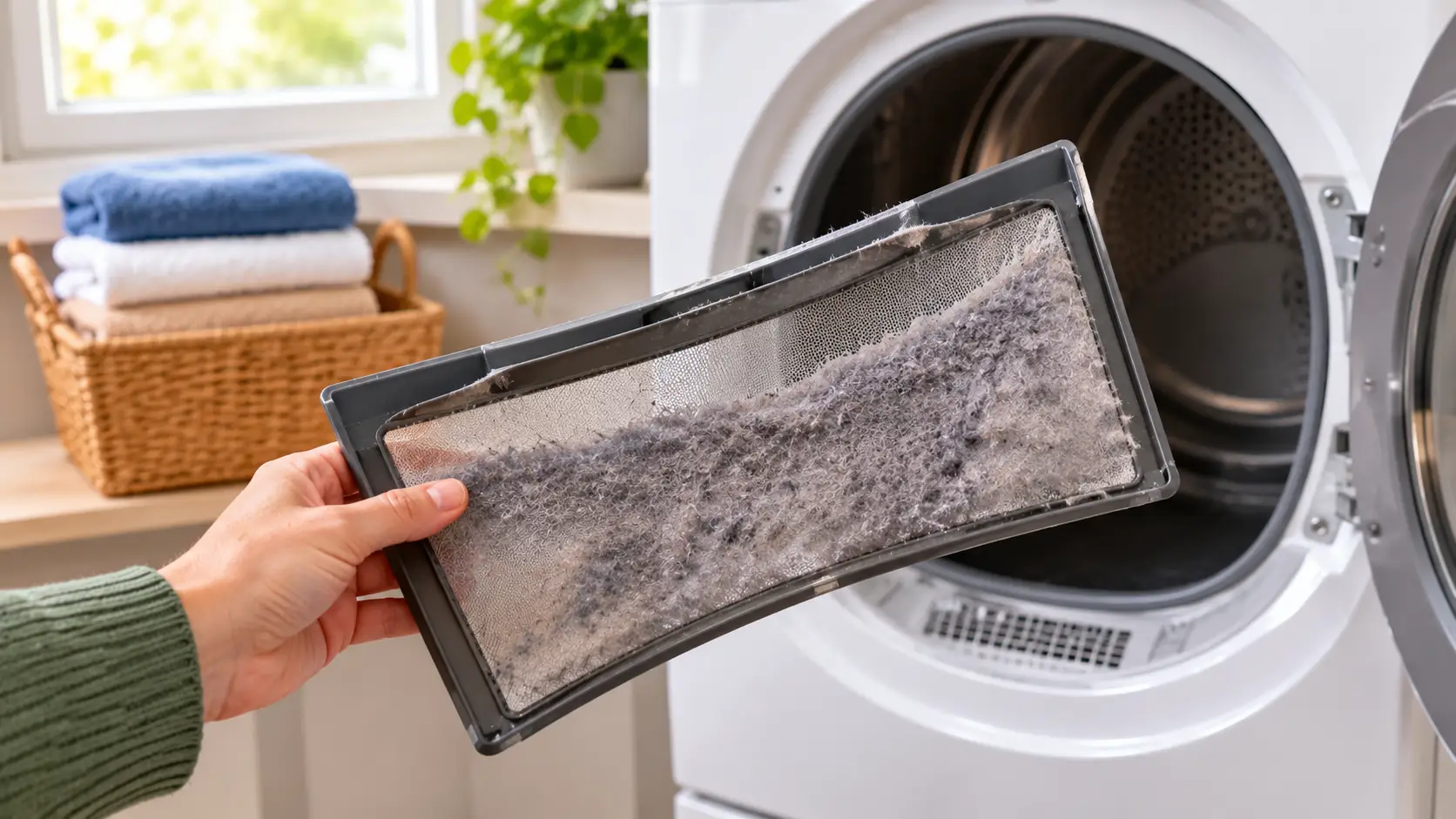
Pull the screen and clean it before every load. Then do a test that most people skip: run water over the screen. If the water pools on the mesh instead of draining through, a thin film from dryer sheets or fabric softener has clogged it, even though it looks clean. Wash the screen with warm water, a little dish soap and a soft brush, let it dry fully, and put it back.
Follow the Vent From the Dryer to Outside
Most of the real problems hide in the vent. The path runs from the back of the dryer, through a duct, and out an exterior wall or roof. Check it in this order:
- Behind the dryer. Is the duct crushed, kinked or pinched by the dryer sitting too close to the wall? A flattened duct can cut airflow sharply.
- The duct itself. Flexible foil or plastic ducts sag and trap lint more than smooth rigid metal does. Manufacturers and safety groups generally prefer rigid or semi-rigid metal duct.
- The exterior flap. Turn the dryer on and go outside. You should feel strong, warm air and see the flap open fully. If it barely moves or stays shut, something is wrong. Lint, a bird’s nest or ice can all block it, and winter weather makes the last two more common.
If you can’t feel a strong airflow outside, the vent needs cleaning. Vent cleaning kits are available, and a professional vent cleaning service is another option. Unplug the dryer (and for gas models, don’t disturb the gas connection) before pulling it away from the wall.
The Load Itself
Holiday guests mean bulky bedding and big piles of towels. An overstuffed drum doesn’t tumble, so air can’t reach the middle of the load.
- Dry thick items like comforters in smaller batches.
- Mix loads sensibly. Heavy towels with light shirts means the shirts finish early and the towels stay wet.
- Check the washer’s spin speed and cycle. A load that comes out of the washer very wet will take far longer to dry. A washer problem can look like a dryer problem.
Dirty Moisture Sensors
Many dryers have sensor bars inside the drum that detect how wet the clothes are. A waxy film from fabric softener can keep them from reading properly, so the dryer may shut off early or run too long. Your manual will show how to clean them, usually with a cloth and a little rubbing alcohol.
When the Clothes Are Hot but Still Damp
Hot-but-damp usually means airflow, not heat. But if there’s not much heat at all, then a different set of parts is involved, such as the heating element, the thermal fuse and the thermostat. That’s a different topic and is covered in our guide to a dryer that runs but doesn’t heat. Never bypass the thermal fuse or other safety parts.
Why Airflow Matters for Safety
Lint is flammable. Manufacturers, fire safety organizations and the U.S. Consumer Product Safety Commission all advise regular cleaning of the lint screen and the vent system. A dryer that’s taking noticeably longer than it used to is giving you an early warning, and it’s worth acting on promptly.
What You Can Safely Do
- Clean and wash the lint screen
- Check and straighten the duct behind the dryer
- Look at the exterior flap while the dryer runs
- Run smaller loads
- Clean the moisture sensor bars per the manual
When to Call a Technician
If the airflow is clear and the dryer still takes too long, or if there’s a burning smell, a technician should look at it. For homes in Indianapolis, AP1 Appliance Repair provides washer and dryer repair for residential machines. The homepage has the contact details.
Longer drying times, a hot dryer exterior, a musty smell in the laundry room, and weak airflow at the exterior flap are all signs. A weak flow outside while the dryer runs is the clearest test.
It isn’t a good idea. A blocked vent traps heat and lint, which raises fire risk and strains the dryer. Clean the vent before using it further.
Most often it’s restricted airflow, so the moisture can’t leave. A dirty moisture sensor or an overloaded drum can cause the same result.
They can leave a film on the lint screen and moisture sensors that reduces airflow and sensing. Washing the screen occasionally helps, and many people use dryer balls instead.
Many manufacturers recommend at least once a year, and more often for heavy use or long duct runs. Check your manual for specifics.
Often yes, with a vent brush kit, as long as you unplug the dryer first. Long or hard-to-reach runs may be better left to a vent cleaning professional.