Skip to content


If your oven went dead, won’t heat, or won’t unlock after a self-clean cycle, the cycle itself is the most useful clue. Self-clean runs far hotter than normal cooking and keeps the door locked for a long stretch. A locked door that hasn’t released, a tripped error code, or a failed thermal fuse are the most common reasons an oven stops working afterward. Some of these you can sort out by waiting. Others need a technician.
Quick Answer
An oven can stop working after a self-clean cycle because the door lock hasn’t released, a control board error was triggered by the high heat, or a thermal fuse or heating component failed. Let the oven cool completely, power it off at the breaker for a few minutes, then check for error codes. If it still won’t heat or unlock, schedule a diagnosis.
Why Self-Clean Can Be the Last Straw
During a self-clean cycle, the oven heats to a temperature well above what any recipe needs and locks the door so nobody gets burned. That puts extra stress on the control board, the temperature sensor, the door lock motor and the wiring behind the panel. A part that was already weak can fail under that heat. This doesn’t mean the cycle is dangerous to use, and it doesn’t mean it damaged a healthy oven, but it explains why a failure often shows up right after one.
The Door Won’t Unlock
This is the most common complaint, and it often resolves itself. The lock stays engaged until the oven cools below a safe temperature, and that can take an hour or more after the cycle ends.
- Leave the oven alone and give it time to cool.
- Look at the display. If it still shows a lock or “cleaning” message, the oven doesn’t consider itself cool yet.
- After it has cooled fully, turn off the breaker for a few minutes, restore power, and see if the lock releases.
Don’t force the door open or pry the latch. The lock mechanism is a safety device, and a forced door can break the latch or the hinge. If the door is still locked many hours after the cycle with a cold oven, the lock motor or switch may have failed.
The Display Shows an Error Code
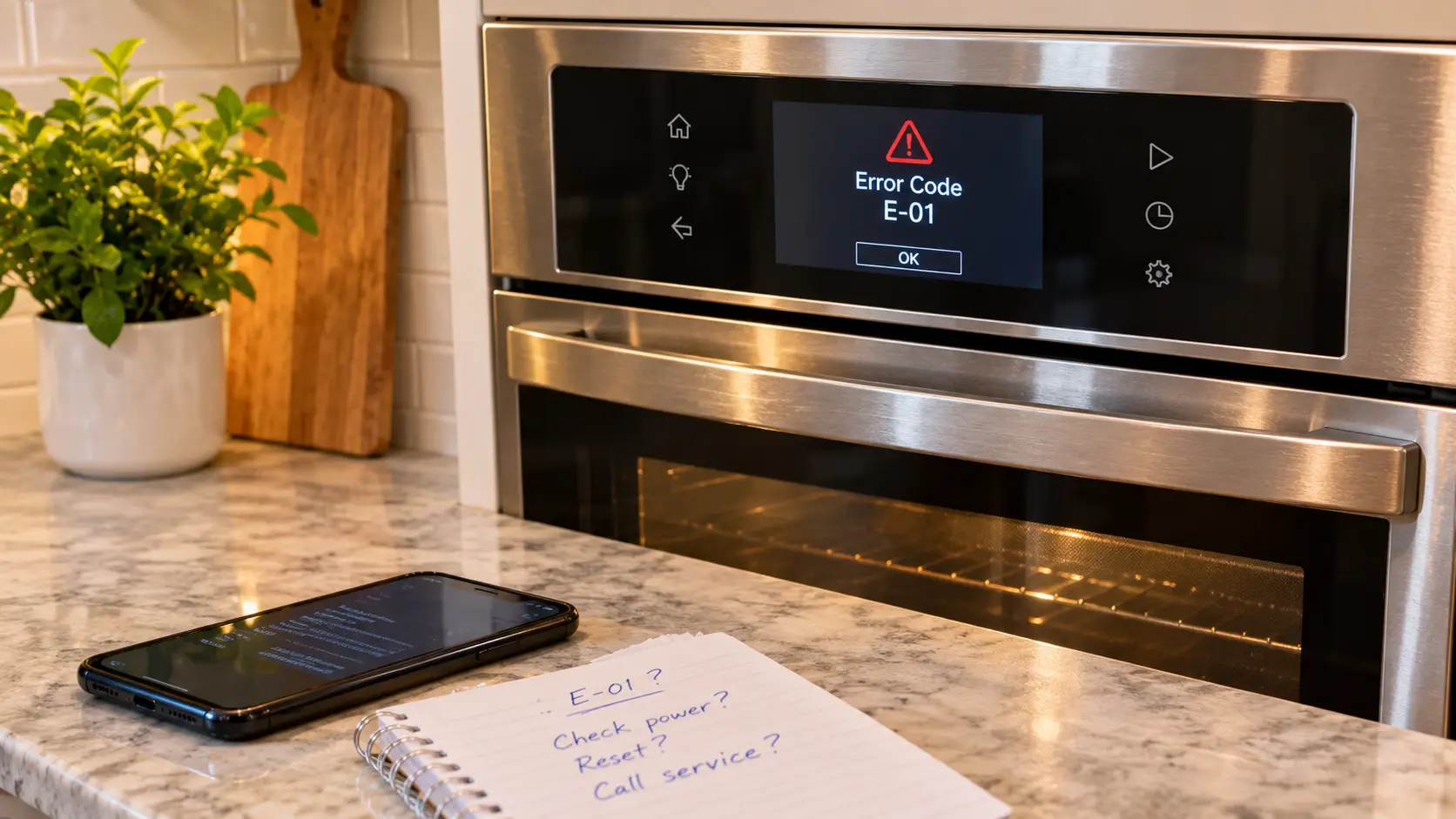
Many ovens display a code that starts with the letter F or E followed by a number when a sensor or the board detects a problem. The codes mean different things on different brands, so write the code down and look it up in the manual or on the manufacturer’s support site for your exact model.
A power reset is a reasonable first move. Switch the oven off at its breaker for several minutes, then restore power. If the code clears and the oven heats normally, it may have been a one-time fault. If the same code returns, the problem is a component, not a glitch.
The Oven Powers On but Won’t Heat
If the display works and the clock runs but the oven doesn’t get hot, a few parts are usually involved:
- A blown thermal fuse. This is a safety device that cuts power to the heating circuit if the temperature goes too high. It doesn’t reset, and it should never be bypassed.
- A failed bake element on an electric oven.
- A faulty temperature sensor. If it reads wrong, the control board may refuse to heat.
- A weak or failed igniter on a gas oven.
Which one it is requires testing with a meter. Guessing and replacing parts in sequence gets expensive.
The Display Is Blank or the Oven Is Dead
A completely dead oven after self-clean often means a blown fuse on the control board or a failed board. First check that the breaker didn’t trip. If power is reaching the oven and it still shows nothing, stop there. Board and wiring work involves live circuits.
Smoke, Odor and Noise
Some smell and light smoke during a self-clean cycle is normal because the oven is burning off residue. A heavy buildup of grease can smoke more. If you see flames, shut off the oven, keep the door closed, and don’t open it until it cools. If the smoke alarm keeps sounding or you smell burning plastic or insulation, switch the oven off at the breaker and have it inspected.
If you have a gas oven and you smell gas at any point, leave the house and call your gas utility from outside. Don’t touch switches.
What You Can Safely Check
- Wait for full cooldown before trying the door
- Check the breaker
- Do a power reset at the breaker
- Write down any error code and the model number
- Look inside for debris that might be blocking a vent
What to Leave Alone
- Forcing the door latch
- Bypassing the thermal fuse or door lock
- Removing the back panel to poke at wiring
- Working on gas lines or igniters
When to Call a Technician
If the oven still won’t heat, unlock or power on after a full cooldown and a reset, it needs a diagnosis. For homes in Indianapolis, AP1 Appliance Repair provides oven and stove repair for residential gas and electric models. If the oven is old and the repair quote is high, the guidance on repair versus replacement in the services overview can help you decide your next step.
The door stays locked until the oven drops below a safe temperature, which can take an hour or longer. If it stays locked after the oven is fully cool, try a breaker reset, and call a technician if that doesn’t work.
Some odor and light smoke are normal as residue burns off. Heavy smoke, flames or a burning plastic smell are not, and the cycle should be stopped.
Wait for it to cool, then check the display for a code. Don’t use it until it unlocks and you’ve confirmed it heats and holds temperature normally.
The breaker may have tripped, or a fuse or the control board may have failed. Check the breaker first. If power is present and the display is still blank, the oven needs a technician.
It depends on the brand and model. The manual or manufacturer’s support page for your exact model lists what each code means.
That’s a personal choice. Hand cleaning avoids the heat stress, and if your oven is older or has had problems, many owners prefer it. Run the cycle well before you need the oven.