Skip to content

A washing machine that fills, washes, and drains but never spins is a common issue for Fishers homeowners, and it almost always points to a specific mechanical or safety-related cause rather than a total appliance failure. Since the spin cycle is what removes excess water from clothes, this problem is usually easy to notice right away.
This article covers the most common reasons a washing machine stops spinning, what’s safe to check yourself, and when to call for professional repair in Fishers.
Quick Answer
A washing machine not spinning is most often caused by a worn or broken drive belt, a lid switch that isn’t engaging, or an unbalanced load triggering a safety shutoff. Redistributing laundry and confirming the lid is latching are reasonable first checks. A broken belt or failed motor coupling typically needs professional replacement.
Why Is a Worn Drive Belt Such a Common Cause?
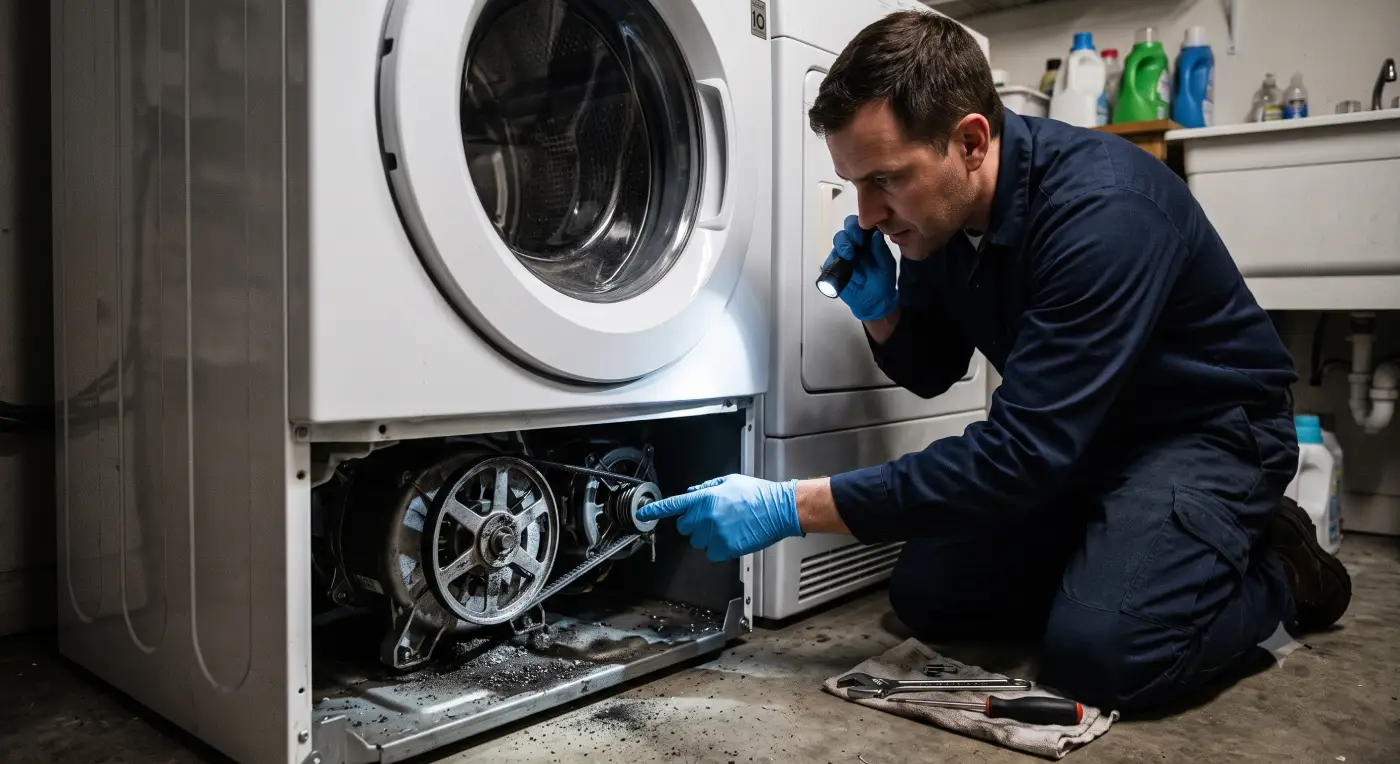
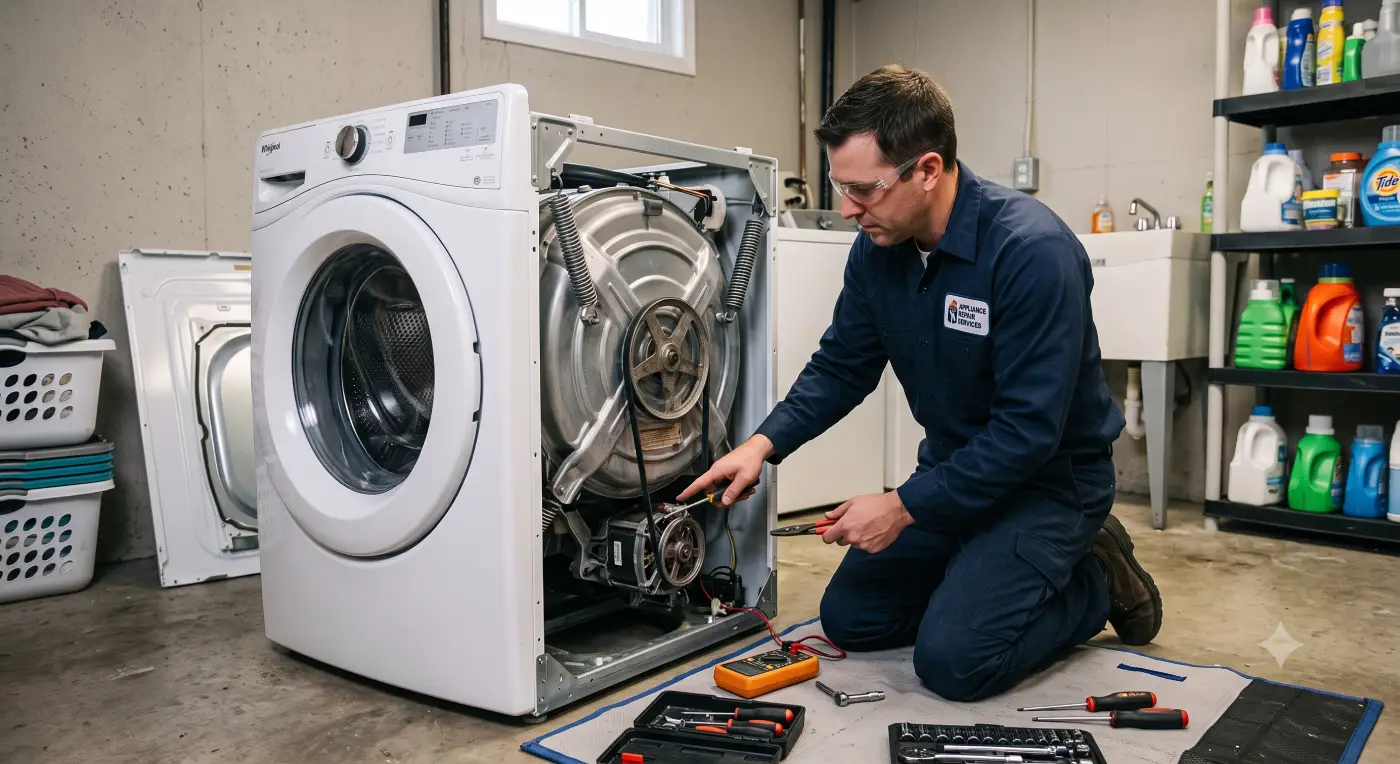
A worn or broken drive belt is one of the most frequent reasons a washing machine won’t spin, since this belt transfers power from the motor to the drum.
Over years of regular use, the belt can stretch, crack, or snap entirely. When this happens, the washer may still agitate on some models but won’t be able to reach spin speed, and a slipping belt can sometimes produce a burning rubber smell.
Could the Lid Switch Be Preventing the Spin Cycle?
Yes. Most washing machines include a safety switch that prevents the drum from spinning unless the lid or door is fully closed and latched, and a failing switch can stop the spin cycle even when the lid appears closed.
Signs of a lid switch issue include the washer pausing as soon as you open the lid slightly during a cycle, or the machine never starting the spin phase even though the lid seems properly shut.
How Does an Unbalanced Load Affect Spinning?
Modern washing machines are designed with sensors that detect unbalanced loads and will pause or stop the spin cycle as a safety precaution to prevent the machine from shaking excessively.
This is one of the easiest causes to rule out, since redistributing the laundry evenly around the drum and restarting the cycle often resolves the issue immediately if an imbalance was the cause.
What Other Components Can Prevent a Washer From Spinning?
Beyond belts, lid switches, and unbalanced loads, a washing machine may fail to spin due to a worn motor coupling, a failing drive motor, or a malfunctioning control board that isn’t sending the correct signal to start the spin cycle.
A motor coupling is a smaller component designed to fail before the motor itself sustains damage from an overloaded or jammed drum, making it a common wear item on many top-load washers.
What Can You Safely Check at Home?
These checks are safe for most Fishers homeowners to try before calling for repair:
- Redistribute the laundry load evenly and restart the cycle
- Confirm the lid or door is closing and latching fully
- Listen for a burning rubber smell, which can indicate a slipping or worn belt
- Check that the washer is sitting level on the floor
- Avoid overloading the washer beyond the manufacturer’s recommended capacity
Safety warning: Do not attempt to replace a drive belt, motor coupling, or access internal electrical components. These repairs require disassembly of the washer cabinet and should be handled by a licensed technician.
When Should You Call a Professional Appliance Repair Technician?
Call a professional for washing machine repair in Fishers if:
- The washer still won’t spin after confirming a balanced load and latched lid
- You notice a burning rubber smell during the cycle
- The washer makes grinding or squealing noises when attempting to spin
- The same issue happens across multiple cycles regardless of load size
- Clothes consistently come out soaking wet at the end of a cycle
Is a Non-Spinning Washer an Urgent Repair?
While not typically a safety emergency, a washer that won’t spin can quickly disrupt a household’s laundry routine, and delaying repair sometimes allows a small issue, like a slipping belt, to worsen into a complete failure.
Frequently Asked Questions
This pattern often points to a drive belt issue, since some washing machines use separate mechanisms for agitation and spinning that can fail independently of each other.
While the switch itself is a relatively small part, accessing it typically requires removing washer panels, which is best handled by a technician to avoid damaging other components during disassembly.
Intermittent spinning issues often point to a lid switch that’s beginning to fail or a load balance sensor that’s especially sensitive, both of which tend to worsen over time.
It’s generally safe to continue using the washer, but you may need to manually wring out or air-dry heavier items until the spin function is repaired, since clothes will retain significant water.
Costs vary depending on the specific cause, from a straightforward lid switch replacement to a more involved belt or motor repair. A technician can provide an accurate estimate after diagnosing the issue.
Not directly, but leaving heavily saturated clothes sitting in the washer for extended periods can contribute to musty odors and, in rare cases, mildew if not addressed promptly.
Conclusion
A washing machine that won’t spin is usually tied to a worn belt, a lid switch issue, or an unbalanced load, though a failing motor coupling can also be responsible. Checking the basics first can sometimes solve the problem, but persistent spinning issues typically need professional repair.
If your washing machine isn’t spinning properly, AP1 Appliance Repair provides washer repair throughout Fishers and the surrounding area. Contact us to schedule a diagnostic visit.