Skip to content

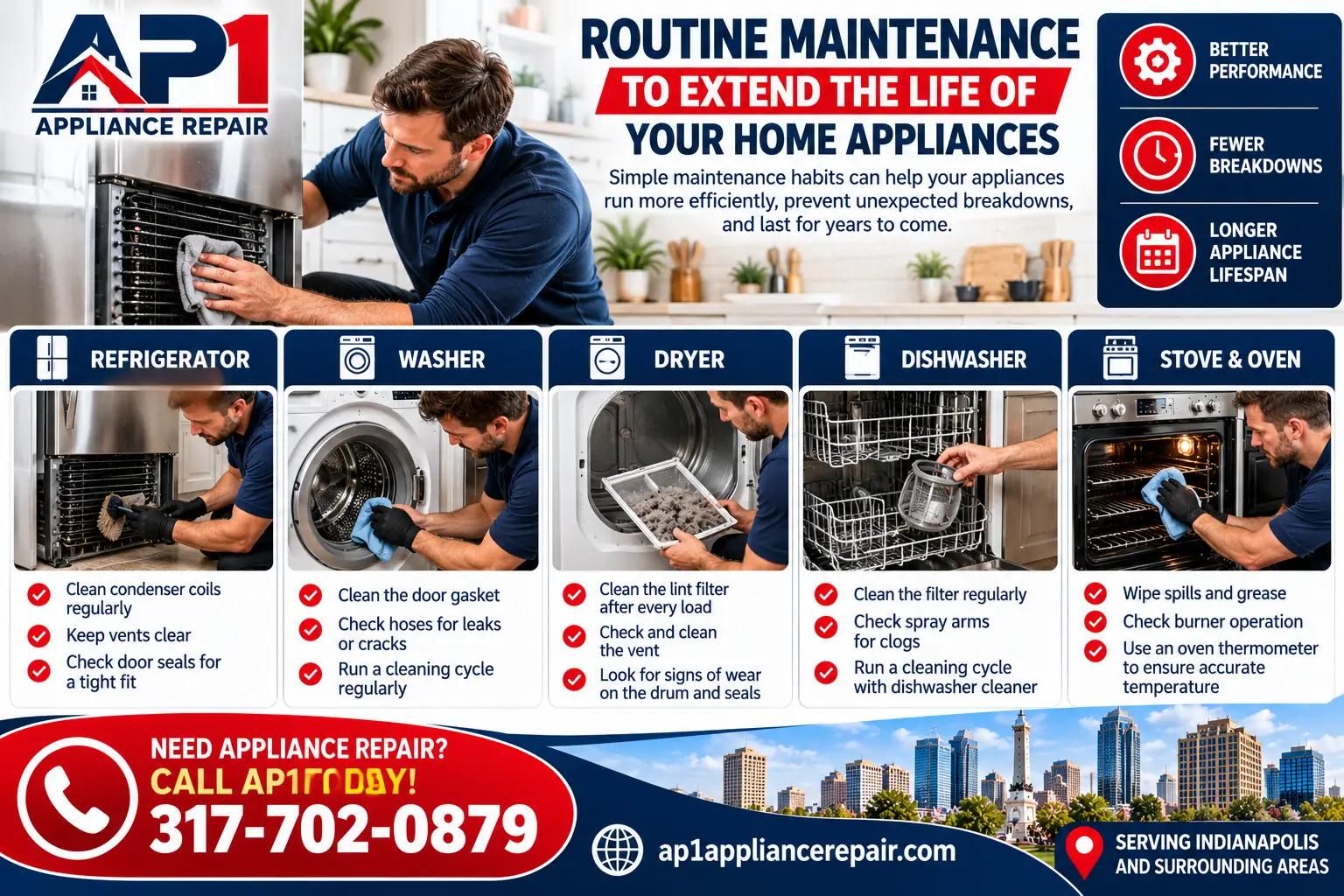
Most major home appliances are built to last a decade or more, but how long they actually run well depends heavily on how they’re used and maintained day to day. The habits that shorten an appliance’s life — overloading it, ignoring airflow needs, skipping basic cleaning — are usually small and easy to overlook. This guide focuses on the cross-appliance habits that make the biggest difference over the years, rather than repeating maintenance steps specific to any one machine.
Quick Answer
Extending the lifespan of home appliances comes down to a few consistent habits: avoiding overuse and overloading, giving appliances proper airflow and clearance, keeping them clean and free of buildup, using them for their intended purpose, and addressing small issues early instead of letting them progress into larger failures.
Don’t Skip the Basics of Airflow and Clearance
Refrigerators, dryers, and even dishwashers rely on airflow to operate efficiently. A refrigerator pushed flush against a wall, a dryer vent that’s never cleaned, or a dishwasher installed without proper ventilation all work harder than they should — and appliances that work harder wear out faster. Following the manufacturer’s clearance recommendations during installation is one of the simplest ways to add years to an appliance’s working life.
Avoid Overloading, Across Every Appliance Type
Overloading isn’t just a washing machine issue. A refrigerator packed too full blocks internal airflow. A dishwasher crammed with dishes doesn’t clean properly and strains the pump. An oven with multiple trays crowded together doesn’t circulate heat evenly. In each case, overloading forces the appliance’s motor, pump, or heating system to work beyond its intended capacity, which accelerates wear on the parts doing that extra work.
Use Appliances for Their Intended Purpose
Running a dishwasher with pots and pans it wasn’t designed to handle, using a dryer to dry items with rubber backing or exposed metal, or running an oven’s self-clean cycle far more often than needed all put unusual stress on components not designed for that use. Checking the owner’s manual for intended use and cycle recommendations helps avoid unnecessary wear.
Keep Appliances Clean, Not Just the Visible Parts
Every major appliance has components that need periodic cleaning beyond what’s visible from the outside — refrigerator condenser coils, dryer vents, dishwasher filters, oven vents, washing machine drain traps. These parts don’t announce that they need attention; buildup happens gradually and its effects show up as reduced performance long before a full failure. A basic seasonal cleaning routine across all major appliances catches this before it becomes a repair.
Address Small Issues Early
A refrigerator that’s running a little warmer than usual, a dishwasher that’s taking longer than normal, a dryer that’s not drying as quickly as it used to — these are usually early signs of a developing problem, not just normal aging. Appliances rarely fail without some warning period first. Addressing a small symptom when it appears is almost always less expensive and less disruptive than waiting until the appliance stops working entirely.
Don’t Ignore Manufacturer Maintenance Recommendations
Every appliance’s owner’s manual includes maintenance recommendations specific to that model — recommended cleaning intervals, parts that need periodic replacement (like water filters), and warning signs to watch for. These recommendations are based on how the appliance is actually engineered, and following them is one of the most reliable ways to get the appliance’s full expected lifespan.
Watch Water Quality and Supply Lines
Hard water accelerates mineral buildup in dishwashers, washing machines, and refrigerator ice makers, shortening the life of internal components. If your home has notably hard water, a water softener or more frequent descaling can meaningfully extend the life of appliances that use water. Supply hoses and connections should also be inspected periodically across all water-using appliances, since a slow leak causes damage well before it’s obvious.
Keep Appliances Level
A washing machine, refrigerator, or dishwasher that isn’t sitting level puts uneven stress on its internal components — bearings, compressors, and door seals all wear differently when an appliance is tilted even slightly. Checking level during installation, and periodically afterward, is a simple step that’s often skipped.
A General Appliance Longevity Routine
- Wipe down and inspect seals/gaskets monthly
- Clean filters, traps, and vents every one to three months
- Check supply hoses and connections twice a year
- Clean condenser coils and vents that require dust removal twice a year
- Review the owner’s manual annually for model-specific maintenance items
- Address any performance change — noise, temperature, cycle time — as soon as it’s noticed
When Professional Help Extends Lifespan Too
Preventive maintenance isn’t only about what homeowners do themselves. Having a technician periodically check components that aren’t easily accessible — compressor performance, motor bearings, electrical connections — can catch developing issues that aren’t visible from routine home maintenance. This is especially useful for appliances nearing the middle or later part of their expected lifespan, when a small repair can meaningfully extend how much longer the unit lasts.
Indianapolis homeowners looking to get the most life out of their major appliances can pair routine home maintenance with occasional professional check-ins, particularly once an appliance is five or more years old. A residential appliance repair technician can identify wear before it turns into a breakdown.
FAQ
Lifespan varies by appliance type, brand, and usage, and depends heavily on maintenance. Checking manufacturer documentation for your specific model gives the most accurate expectation.
Yes. Components like condenser coils, dryer vents, and dishwasher filters directly affect how hard the appliance’s motor or pump has to work, and buildup accelerates wear over time.
It depends on the appliance’s age, the cost of the repair, and its overall condition — this is worth evaluating case by case rather than assuming either option is always better.
Twice a year is a reasonable interval for visual inspection, with full replacement recommended every five years regardless of appearance.
Yes, hard water accelerates mineral buildup in dishwashers, washing machines, and ice makers, which can shorten the life of components that come into contact with water.
Airflow and clearance are commonly overlooked — many appliances are installed too close to walls or cabinets, which makes them run harder than necessary from day one.